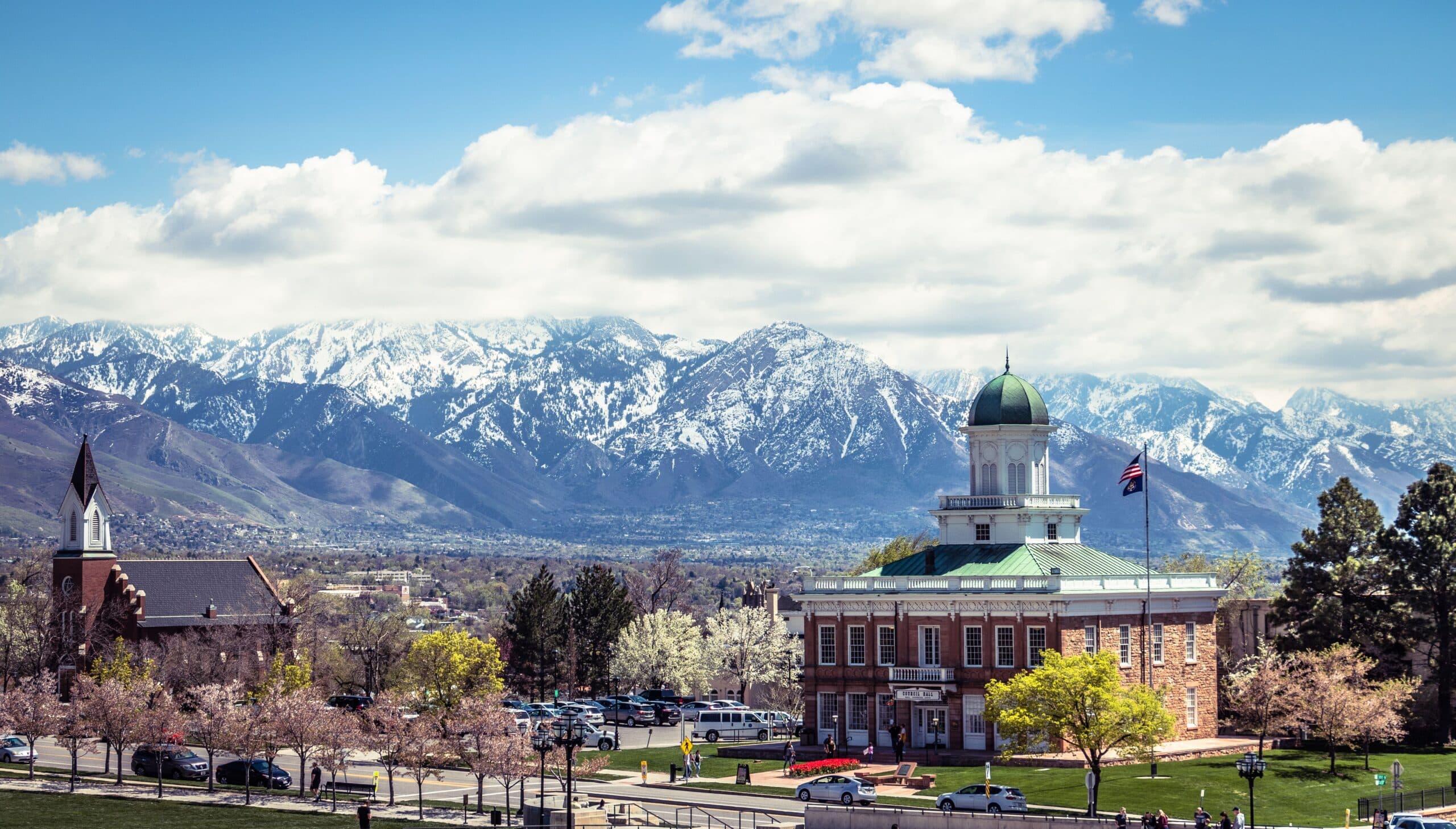
What a Utah buyer pays at closing
Closing costs are everything you pay to get your loan and take ownership, beyond the down payment. The CFPB says they typically range from 2% to 5% of the home's purchase price. Where you land depends on the price, your down payment, your lender's charges, your loan type, the type of home and its location.
Your lender lists your expected costs on the Loan Estimate, which you should get within three business days of applying. Your final costs are on the Closing Disclosure, which you should get at least three business days before closing. In Utah the closing is usually handled by a title company acting as the escrow or settlement agent.
Utah's state-approved Real Estate Purchase Contract (REPC), effective December 4, 2024, sets the default split of several costs. Buyer and seller can change any of them in writing.
| Cost | Who usually pays in Utah | Source |
|---|---|---|
| Lender origination charges, points, appraisal, credit report | Buyer, as part of the loan | Your Loan Estimate, Sections A and B |
| Lender's title insurance policy | Buyer | Utah Insurance Department FAQ; your Loan Estimate |
| Owner's title insurance policy | Seller (ALTA Homeowner's Policy, or Owner's Policy if not available) | REPC § 6.2 |
| Escrow / settlement fee | Each side pays its own | REPC § 4.3(a) |
| County recording fees (your deed of trust) | Buyer, typically | Utah Code § 17-71-407; your title company's estimate |
| Inspections and other due diligence | Buyer, unless the REPC provides otherwise | REPC § 8.1(a) |
| Property taxes and HOA dues | Prorated as of the Settlement Deadline | REPC § 4.1 |
| HOA change-of-ownership fee | Seller, buyer, split or other: a checkbox | REPC § 4.3(c) |
| Prepaid items and initial escrow deposit | Buyer | Your Loan Estimate, Sections F and G |
| Your brokerage's compensation | What your buyer agreement says, less any Seller's Compensation Contribution | REPC § 4.3(e) |
No transfer tax, just recording fees
Utah doesn't charge a state real estate transfer tax. The government charge at a Utah closing is the county recording fee. Utah Code § 17-71-407 (effective May 6, 2026) sets the fee for recording most instruments at $40, with an additional $5 in second- through sixth-class counties unless the county's restricted recording account has a balance. Nothing in that section charges a percentage of the sale price.
As a buyer with a loan, the document you typically pay to record is your deed of trust. Your title company's estimate shows exactly which recording charges fall to you. A 2024 proposal to add a ban on transfer taxes to the Utah Constitution (S.J.R. 2) didn't pass, so the absence of a transfer tax comes from state law as it stands, not the constitution.
Title insurance and escrow
There are two title policies. The lender's policy protects the amount your lender lent, and most lenders require it. The owner's policy protects your own investment in the home. The Utah Insurance Department says the seller usually pays for the buyer's owner's policy and the buyer usually pays for the lender's policy, which matches REPC § 6.2. The owner's policy is based on the full price, while the lender's policy is based on the loan amount.
Utah is a file-and-use state for title insurance. Title insurers must file their rates with the Insurance Department and charge the rates on file, so there's no negotiating the premium itself. The Department notes that escrow fees and other closing costs can differ between agents, and you can shop for them.
The CFPB adds that your lender will give you a list of closing service providers, but you can choose one not on the list if your lender agrees. The seller can't require you to buy title insurance from a particular title company. When comparing title costs, compare the bottom-line total, because a title company's itemized list may be laid out differently from your Loan Estimate.
Prepaid items and your escrow account
Prepaids aren't fees. They're costs of owning the home that you pay ahead of time. The CFPB's home loan toolkit says homeowners insurance is often paid in advance for the first full year, and some taxes and other fees need to be paid in advance too. They appear in Section F of the Loan Estimate and Closing Disclosure.
- Homeowners insurance: often the first full year's premium, paid at closing.
- Prepaid interest: daily interest from your closing date to the start of your first payment period. Closing later in the month usually means fewer days to prepay.
- Initial escrow deposit: if your lender holds an escrow account for taxes and insurance, you fund it at closing (Section G). Federal rules let a lender keep a cushion of no more than one-sixth of the estimated annual payments from the account (12 CFR § 1024.17).
Utah property taxes are due November 30 each year (Utah Code § 59-2-1331). If you buy before the bill is paid, the REPC prorates the year's tax as of the Settlement Deadline (§ 4.1). The seller credits you for their share of the year, and you pay the full bill when it comes due. That credit offsets part of what you pay at closing.
Fees that depend on your loan program
- FHA: an upfront mortgage insurance premium of 1.75% of the base loan amount, which is usually added to the loan rather than paid in cash (HUD Mortgagee Letter 2023-05).
- VA: a funding fee on purchase loans of 2.15% for first use with less than 5% down, 1.5% with 5% or more down and 1.25% with 10% or more down. It's 3.3% after first use with less than 5% down. Veterans receiving VA disability compensation, among others, are exempt (VA, rates effective April 7, 2023).
- Utah Housing Corporation loans: the lender's origination fee can't exceed 1.5% of the first mortgage amount (Selling Supplement, definition of Closing Fee).
- Discount points: optional on any loan. One point is 1% of the loan amount, paid to lower your rate.
For Utah Housing's down payment assistance and first-time buyer programs, see /buy/guides/first-time-buyer-utah/.
A worked range on a $500,000 home
Using the CFPB's 2% to 5% range, closing costs on a $500,000 purchase would typically run $10,000 to $25,000, on top of your down payment. Your actual number comes from your Loan Estimate and your title company's estimate. We don't give a typical line-by-line figure here because lender, title and escrow charges vary by company, county and loan.
Some of your closing costs can change between the Loan Estimate and closing, but there are limits. The CFPB says charges for services you can shop for might increase at closing, but generally by no more than 10% of the costs on your final Loan Estimate. Check your Closing Disclosure against your Loan Estimate line by line.
How seller credits can offset your costs
A seller can agree to pay some of your closing costs, often called a seller concession. In Utah this is negotiated in your offer and written into the contract or an addendum. Your loan program limits how much a seller and other interested parties can contribute.
| Loan type | Limit on seller and other interested-party contributions |
|---|---|
| Conventional (Fannie Mae), home you'll live in | 3% of the lower of price or appraised value with less than 10% down; 6% with 10% to less than 25% down; 9% with 25% or more down |
| Conventional (Fannie Mae), investment property | 2% |
| FHA | 6% of the sales price |
| VA | Seller concessions limited to 4% of the home's reasonable value; VA says normal closing costs the seller pays don't count toward that limit |
| USDA guaranteed | 6% of the price toward financing costs, closing costs and similar items |
Under Fannie Mae's rules, credits can pay closing costs and prepaids but can't fund your down payment or reserves, and can't exceed your actual closing costs. A seller's payment toward your agent's commission is handled separately. For more, see /sell/guides/seller-concessions/.
Your lender may also offer a lender credit in exchange for a higher interest rate. It appears in Section J of your Loan Estimate and reduces your upfront costs.
How JupiDoor's cash back can offset your costs
In Utah, buyers who purchase with JupiDoor get 1% of the purchase price back when the seller offers a 3% buyer-agent commission. JupiDoor keeps a 2% minimum, so there's no cash back when the commission it receives is 2% or less. There's no minimum purchase price and no maximum rebate. It's paid as a closing credit, a check or a commission adjustment. Full terms are at /cashback/.
On a hypothetical $500,000 purchase where the seller offers 3%, that's $5,000, which could cover a meaningful share of the $10,000 to $25,000 typical range above. At 2.5% it would be $2,500, and at 2% or less there's none.
Your lender has to approve how it's paid. Fannie Mae and FHA count real estate brokers as interested parties, so a cash back credit and any seller credit share the same limit in the table above. If you're putting less than 10% down on a conventional loan, the combined limit is 3% of the lower of price or appraised value, $15,000 on a $500,000 home that appraises at price. Credits also can't exceed your actual closing costs. Some programs, such as Utah Housing loans, restrict cash to the buyer at closing, so excess may have to go toward your costs or your loan instead.
What JupiDoor is paid on your purchase, and what happens if the seller contributes less, is set by the buyer agreement you sign before touring. Ask JupiDoor about those terms before you sign, and tell your loan officer about the cash back as soon as you do.
For the legal and tax side of buyer rebates, see /buy/guides/cash-back-rebate-taxes/. To compare Utah rebate programs, see /compare/utah-buyer-rebates/. Cash back applies to Utah purchases only. JupiDoor doesn't represent buyers in Idaho.
This page summarizes CFPB guidance, the state-approved REPC, Utah Code, and federal loan program rules as of November 2026. It isn't legal, tax or lending advice. Your Loan Estimate and your title company's estimate show your actual costs. Ask your lender how any seller credit or cash back will be treated on your loan.
This guide is general information about how buying works in Utah and Idaho, not legal, tax or financial advice. Laws, forms and customs change; read the actual documents you are asked to sign, and talk to an attorney or tax professional about your situation.